

Win More Clients With Financial Content That Ranks and Stays Compliant
Docket runs financial services content marketing for banks, credit unions, advisers and insurers: topics planned from real search demand and tax dates, full drafts in your voice, and the banned terms, claims and risk warnings your compliance team sets checked before every publish. Every draft arrives checked, so content moves faster without cutting corners.

Risk warning checked word for word
Before every publish, including scheduled posts
Why Does Financial Content Stall in Compliance Review?
Four common patterns, and the part of Docket built for each one.
Every Draft Comes Back for the Same Three Words
The Financial Services preset puts risk-free, guaranteed returns, get rich and beat the market on the never-use list. Add them to brand safety and they block the publish.The Risk Warning Is Missing Again
Required disclaimers are lines that must appear word for word. A draft without yours cannot be published, by anyone.Anyone With a Login Can Go Live
Set the approval role to Owner and only a workspace owner can publish. Brand safety rules apply to every publish.Customers Ask ChatGPT Which Provider to Pick
Docket asks ChatGPT, with live web search, the questions your customers ask, and shows which firms it named instead of yours.
What Blocks a Financial Article From Publishing?
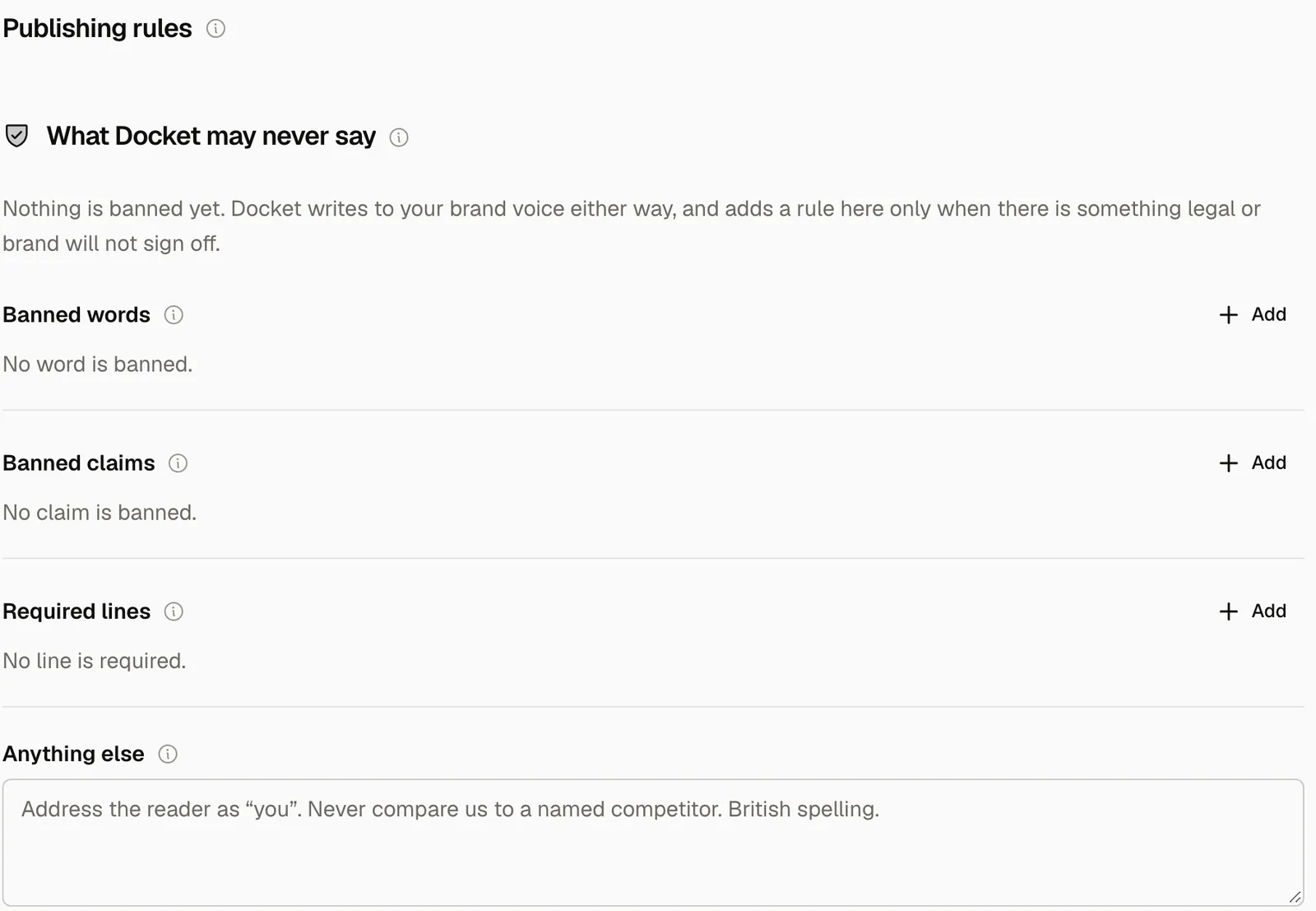
Four things, all set by your team: a banned term, a banned claim, a missing required disclaimer, and a competitor named in the title, meta or excerpt. Any one of them blocks the publish, every time.
Add the optional fact check and a draft's claims are compared with your own business details. Make it required, and a missing or flagged check blocks the publish too.
- Banned Claims Matched Literally; the Fact Check Reads for Implied Ones
- A Rule That Cannot Be Checked Blocks the Publish Instead of Waving It Through
- A Scheduled Post That Fails Comes Off the Schedule, With the Reason Logged
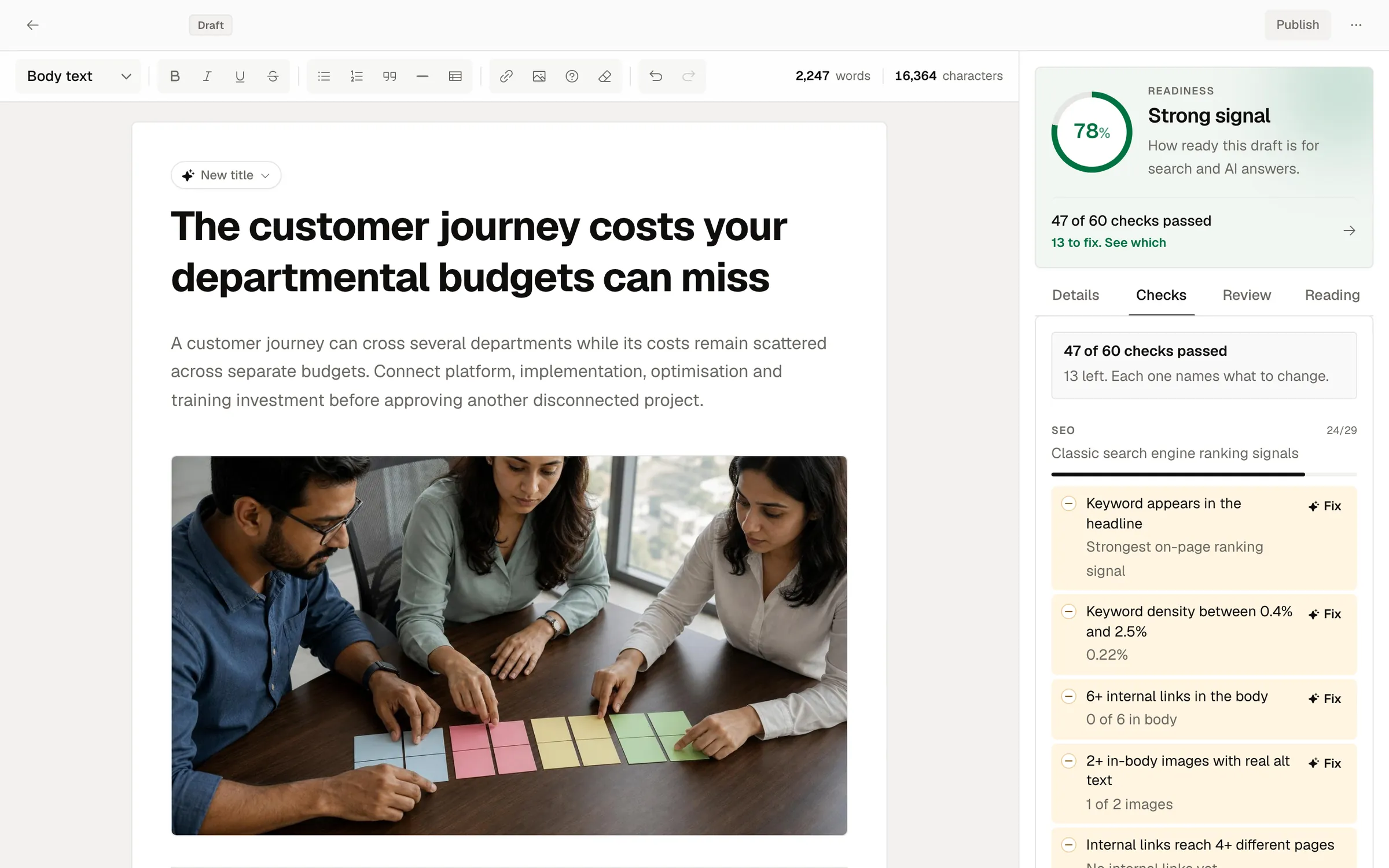
Which Financial Dates Does Docket Plan Around?
Dated occasions filtered by your region and industry. For a financial firm: the UK tax year end and Self Assessment deadline, US Tax Day, the Indian financial year end, budget and planning season and the year in review.
Writing starts 45 days before each tax date, so the ISA explainer is through review and live well before 5 April.
- Dates Computed, Never Guessed
- Every Seasonal Topic Gets a Start Date, a Live Date and the Occasion Itself
- A 3-month Calendar Filled in at Setup
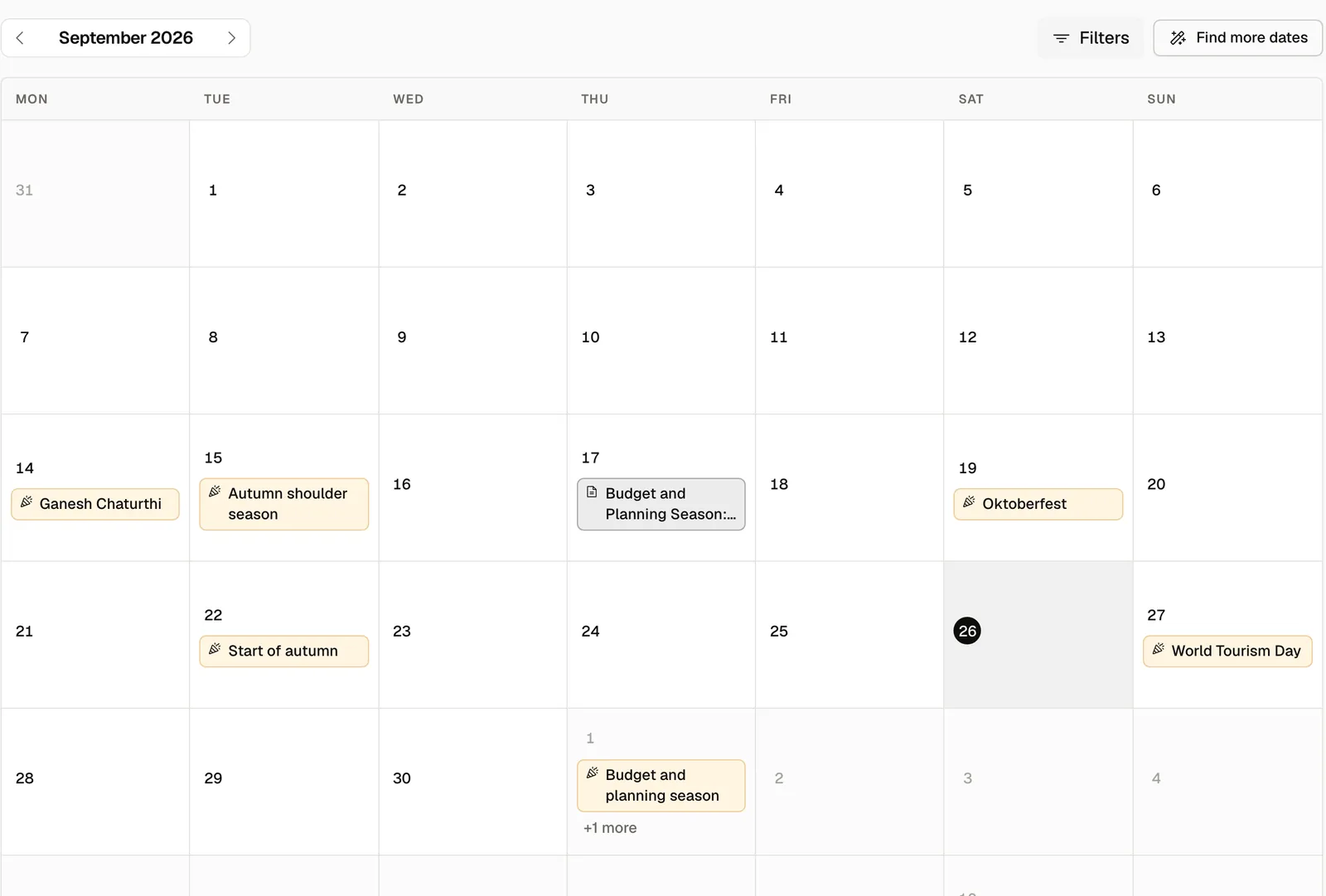
Which Firms Does ChatGPT Recommend to Your Customers?
Customers ask which account, mortgage or adviser suits them, not for your name. Docket tracks 20 questions by default, built from your website and your real Google Search Console queries. Add your own, up to 100.
Each answer is read for whether you were named, who was named instead, and which sources ChatGPT trusted to decide.
- Hallucinations Kept Apart From Factual Errors, Because the Fixes Differ
- Share of Voice Reported as a Range, Not False Precision
- Each Gap Can Become a Content Brief in One Click
Financial Services Content Marketing for Every Kind of Firm
Examples of the questions each kind of firm should own. The Financial Services preset already plans for retail savers, small business owners and first-time investors.
Bank
“Which bank has the best business account for a new limited company?”Credit Union
“Can I join a credit union if I work in the city but live outside it?”Wealth and Advisory Firm
“What does a financial adviser charge for retirement planning?”Insurer
“What does home insurance cover if a pipe bursts?”
Risk Warnings in Every Blog Post, Checked Word for Word
Banned terms, banned claims, the risk warning that must appear word for word, who can publish and whether a fact check is required: all set once per website, and applied to every draft.
- Add Verified Facts and Boilerplate to the Vault
- Set Approval to Owner So Only a Workspace Owner Can Publish
Fewer Redlines, Same Rulebook
| Topic | The Usual Way | With Docket |
|---|---|---|
| Risk Warnings | The Usual Way: Pasted in by hand, when someone remembers. | With Docket: Checked word for word. Missing means the publish is blocked. |
| Promises | The Usual Way: Caught in the third review round, if at all. | With Docket: Banned terms and claims block the publish, every time. |
| Publishing Permissions | The Usual Way: Whoever has the WordPress login. | With Docket: Optionally, only a workspace owner can publish. |
| Firm Facts | The Usual Way: Copied from last year's brochure. | With Docket: With the fact check on, claims are compared with your own business details. |
| Tax Dates | The Usual Way: The tax year end piece goes live in April. | With Docket: Writing starts 45 days before each tax date. |
| AI Answers | The Usual Way: Checked by hand, now and then. | With Docket: Customer questions asked in ChatGPT, answers read for who was named. |
How Does a Financial Firm Get Started With Docket?
Paste a URL, add the rules your compliance team already has, and Docket gets to work.
- 1
Paste Your Website Address
Docket reads your homepage and up to 4 more pages, such as your products, rates and contact pages. It lifts up to 6 sentences word for word as voice samples. - 2
Pick Financial Services
The preset brings a clear, sober tone and content patterns: product comparison guides, fee and charge explainers, regulatory change updates, and planning and scenario guides. - 3
Write Your Brand Safety Rules
Banned terms, banned claims, required disclaimers, who can publish and whether a fact check is required. Add verified facts and boilerplate to the Vault. - 4
Get Checked Drafts
Each draft has at least 1,500 words, 10 to 14 FAQs, real tables where things are compared, and 450+ checks on screen. - 5
Publish to WordPress
Publish now or on a schedule. The rules run first, and if one needs attention, the reason is shown right there.
Built Around Your Firm's Compliance Rules.
Docket is a content platform with a strict publish gate. Your team sets it up once, and it applies to every draft on every website.
Your Compliance Team Writes the Rules
Banned terms, banned claims and the risk warning come from them, and Docket applies them to every draft.
Educational by Design
The preset shows the arithmetic, never implies a return is assured, and encourages a conversation with an adviser.
Facts From Your Own Firm
The optional fact check compares claims with your own business details, the facts you keep in Docket.
Publishing Permissions
Limit publishing to workspace owners, and every post is checked against your rules first.
Brands Kept Apart
Each workspace sees only its own websites, so brands that must stay separate each get a workspace of their own.
Measured in ChatGPT, Live
Customer questions are asked in ChatGPT with live web search, so every reading reflects what customers actually see.
Financial Services Content Marketing Questions, Answered
How does Docket help financial services firms with content marketing?
Docket reads your firm's website, suggests unlimited topic ideas every week, scored from your search demand and a calendar of dated occasions, drafts each one you pick in your voice and checks it 450+ ways. Your brand safety rules are checked before every publish, and posts go to WordPress now or on a schedule.
Can Docket stop articles from promising returns?
Yes, for the words and claims you list. Banned terms such as “guaranteed returns” or “risk-free” are matched on whole words across the title, meta, excerpt and body, and banned claims are matched literally. Either one blocks the publish, every time.
Can we require a risk warning on every article?
Yes. Add your risk warning as a required disclaimer and Docket checks that it appears word for word before anything publishes. A draft without it cannot go live. A scheduled post that fails the check comes off the schedule, with the reason logged.
Does Docket make financial content compliant with regulations?
Docket checks every draft against the compliance rules your team sets: banned terms, banned claims, required risk warnings and, if you switch it on, a fact check against your own firm's details. It supports your compliance review rather than replacing it, so reviewers receive cleaner drafts and can focus on whether each article is fair, clear and suitable.
Does Docket give investment advice?
Docket drafts educational and marketing articles for your firm, such as product comparisons and fee explainers, rather than personal advice. The Financial Services preset tells the writer to show the arithmetic, never imply a return is assured, and encourage a conversation with an adviser.
Which financial dates does Docket plan content around?
Dates filtered by your region and industry. For a financial firm that includes the UK tax year end and Self Assessment deadline, US Tax Day, the Indian financial year end, budget and planning season and the year in review. Writing starts 45 days before each tax date.
Can we limit who is allowed to publish?
Yes. Set the approval role to Owner and only a workspace owner can publish. Brand safety rules apply to every publish, instant or scheduled.
How can my firm get recommended by ChatGPT?
Docket helps by showing where ChatGPT names other firms instead of yours, then turning each gap into a brief for an article that answers that customer question clearly. Every draft is graded against Docket's GEO checks, such as a direct, quotable opening answer and recorded sources. Docket then measures whether ChatGPT names you, reading by reading.
Can Docket tell me what ChatGPT says about our firm?
Yes. Docket asks ChatGPT, with live web search, the questions your customers ask: 20 by default and up to 100. It records whether your firm was named, which firms were named instead and which sources were cited, so every reading reflects what customers actually see.
Bring Your Rulebook. See It Check a Real Draft.
See your rules check a draft, your tax-season topics and what ChatGPT tells customers, with your own domain on the screen.